
What Is SEO and Why Is It Important for Your Website?
Introduction
In today’s digital world, having a website is not enough. Millions of websites compete for attention online, and if your website is not visible on search engines like Google, your potential customers may never find you. This is where SEO becomes essential.
SEO, or Search Engine Optimization, is one of the most powerful digital marketing strategies that helps websites rank higher in search engine results. Whether you own a small local business, an e-commerce store, or a corporate website, SEO can help you attract more visitors, increase brand awareness, and generate more sales.
In this blog, we will explore what SEO is, how it works, and why it is important for your website’s growth.
What Is SEO?
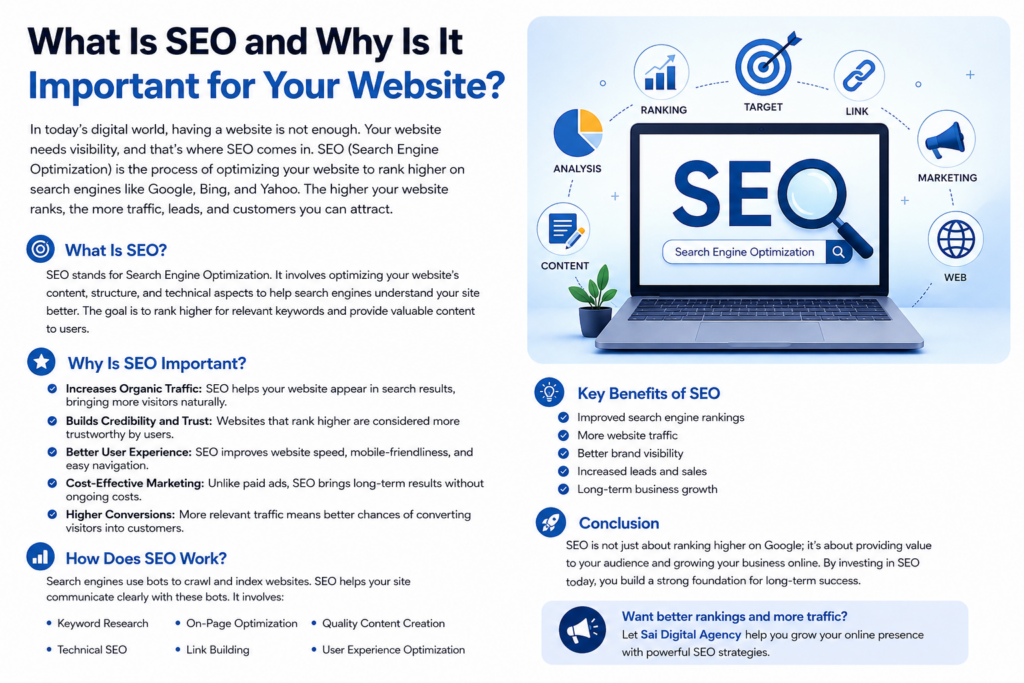
SEO (Search Engine Optimization) is the process of improving a website so that it appears higher in search engine results pages (SERPs) when users search for related keywords.
For example, if someone searches for “best digital marketing agency,” Google shows a list of websites that it considers most relevant and trustworthy. SEO helps your website appear in those top results.
The main goal of SEO is to:
- Increase organic (free) website traffic
- Improve website visibility
- Generate quality leads
- Enhance user experience
- Build trust and credibility
SEO is not about tricking search engines. It focuses on creating valuable content, improving website performance, and providing a better experience for users.
How Search Engines Work
Search engines like Google use advanced algorithms to decide which websites should appear for a particular search query.
The process generally includes:
1. Crawling
Search engines use bots called crawlers or spiders to scan websites and collect information.
2. Indexing
After crawling, the information is stored in Google’s database called an index.
3. Ranking
Google analyzes hundreds of ranking factors to determine which pages should appear first in search results.
SEO helps optimize your website according to these ranking factors.
Types of SEO
1. On-Page SEO
On-page SEO focuses on optimizing content and elements within your website.
Examples include:
- Keyword optimization
- Meta titles and descriptions
- Heading tags
- Image optimization
- Internal linking
- Quality content creation
2. Off-Page SEO
Off-page SEO involves activities outside your website that improve authority and trust.
Examples include:
- Backlink building
- Social media sharing
- Guest posting
- Brand mentions
3. Technical SEO
Technical SEO improves website performance and helps search engines crawl your website effectively.
Examples include:
- Website speed optimization
- Mobile responsiveness
- Secure HTTPS connection
- XML sitemap
- Fixing broken links
4. Local SEO
Local SEO helps businesses appear in local search results.
Examples include:
- Google Business Profile optimization
- Local keywords
- Customer reviews
- Location pages
Why Is SEO Important for Your Website?
1. SEO Increases Website Visibility
Most users click on websites that appear on the first page of Google. SEO helps your website rank higher, making it easier for people to discover your business online.
Higher visibility means:
- More website visitors
- Increased brand exposure
- Better online presence
2. SEO Drives Organic Traffic
Organic traffic refers to visitors who come to your website through unpaid search results.
Unlike paid advertising, SEO provides long-term traffic without paying for every click.
Benefits of organic traffic include:
- Cost-effective marketing
- Consistent visitors
- Better conversion opportunities
3. SEO Builds Trust and Credibility
Users trust websites that appear at the top of search engine results.
Google ranks websites based on quality, relevance, and authority. When your website ranks higher, customers are more likely to trust your business.
Factors that build trust include:
- High-quality content
- Positive user experience
- Fast-loading website
- Secure browsing experience
4. SEO Improves User Experience
SEO is not only about search engines. It also focuses on improving user experience.
A well-optimized website should:
- Load quickly
- Be mobile-friendly
- Have easy navigation
- Provide useful information
- Offer a smooth browsing experience
When users enjoy your website, they stay longer and are more likely to become customers.
5. SEO Helps Generate Quality Leads
SEO targets users who are actively searching for products or services related to your business.
This means SEO attracts highly targeted visitors who are already interested in what you offer.
For example:
- A user searching for “SEO services near me” is likely looking to hire an SEO agency.
- A user searching for “best website design company” may be ready to purchase website services.
This targeted traffic often leads to higher conversion rates.
6. SEO Supports Long-Term Business Growth
Paid advertising stops generating traffic once your budget ends. SEO, however, continues to deliver results over time.
A strong SEO strategy can:
- Generate consistent traffic
- Improve brand recognition
- Increase sales opportunities
- Support long-term growth
SEO is a long-term investment that keeps working for your business.
7. SEO Gives You a Competitive Advantage
Your competitors are likely investing in SEO already.
If your website is not optimized, you may lose customers to competitors who rank higher in search results.
By implementing SEO strategies, your business can:
- Outrank competitors
- Attract more customers
- Build stronger online authority
8. SEO Improves Mobile Performance
Most internet users now browse websites using smartphones.
Google prioritizes mobile-friendly websites in search results. SEO ensures your website performs well across all devices.
A mobile-optimized website helps:
- Improve rankings
- Reduce bounce rates
- Increase user engagement
Key SEO Ranking Factors
Google uses many factors to rank websites. Some important ranking factors include:
- High-quality content
- Relevant keywords
- Mobile-friendliness
- Website speed
- Backlinks
- User experience
- Secure HTTPS website
- Technical optimization
Improving these areas can significantly boost your search engine rankings.
Common SEO Mistakes to Avoid
Many businesses make SEO mistakes that hurt rankings.
Avoid these common mistakes:
Keyword Stuffing
Overusing keywords makes content unnatural and can lead to penalties.
Poor Quality Content
Thin or copied content provides little value to users.
Ignoring Mobile Optimization
Non-mobile-friendly websites lose rankings and visitors.
Slow Website Speed
Slow websites create poor user experiences.
Missing Meta Tags
Meta titles and descriptions help search engines understand your content.
Broken Links
Broken links negatively affect user experience and SEO performance.
SEO Tips for Beginners
If you are starting SEO for your website, follow these simple tips:
- Research relevant keywords
- Create high-quality content
- Optimize page titles and meta descriptions
- Improve website speed
- Use mobile-friendly design
- Build quality backlinks
- Update content regularly
- Use internal linking
- Optimize images
- Track performance using analytics tools
The Future of SEO
SEO continues to evolve with changing technology and user behavior.
Future SEO trends include:
- AI-powered search
- Voice search optimization
- Video SEO
- User experience optimization
- Mobile-first indexing
- Semantic search
Businesses that stay updated with SEO trends can maintain strong online visibility.
Conclusion
SEO is one of the most important digital marketing strategies for any business website. It helps increase visibility, attract organic traffic, improve user experience, and generate quality leads.
In a highly competitive online world, SEO is no longer optional — it is essential for business growth.
By investing in SEO, businesses can build long-term success, strengthen their online presence, and stay ahead of competitors.